An LED screen for a hotel lobby and an LED screen on a highway hoarding are both "LED displays", but they are built for completely different conditions. Putting the wrong type in the wrong place is one of the most expensive mistakes buyers make. Here is what really changes between indoor and outdoor LED displays.
Quick comparison
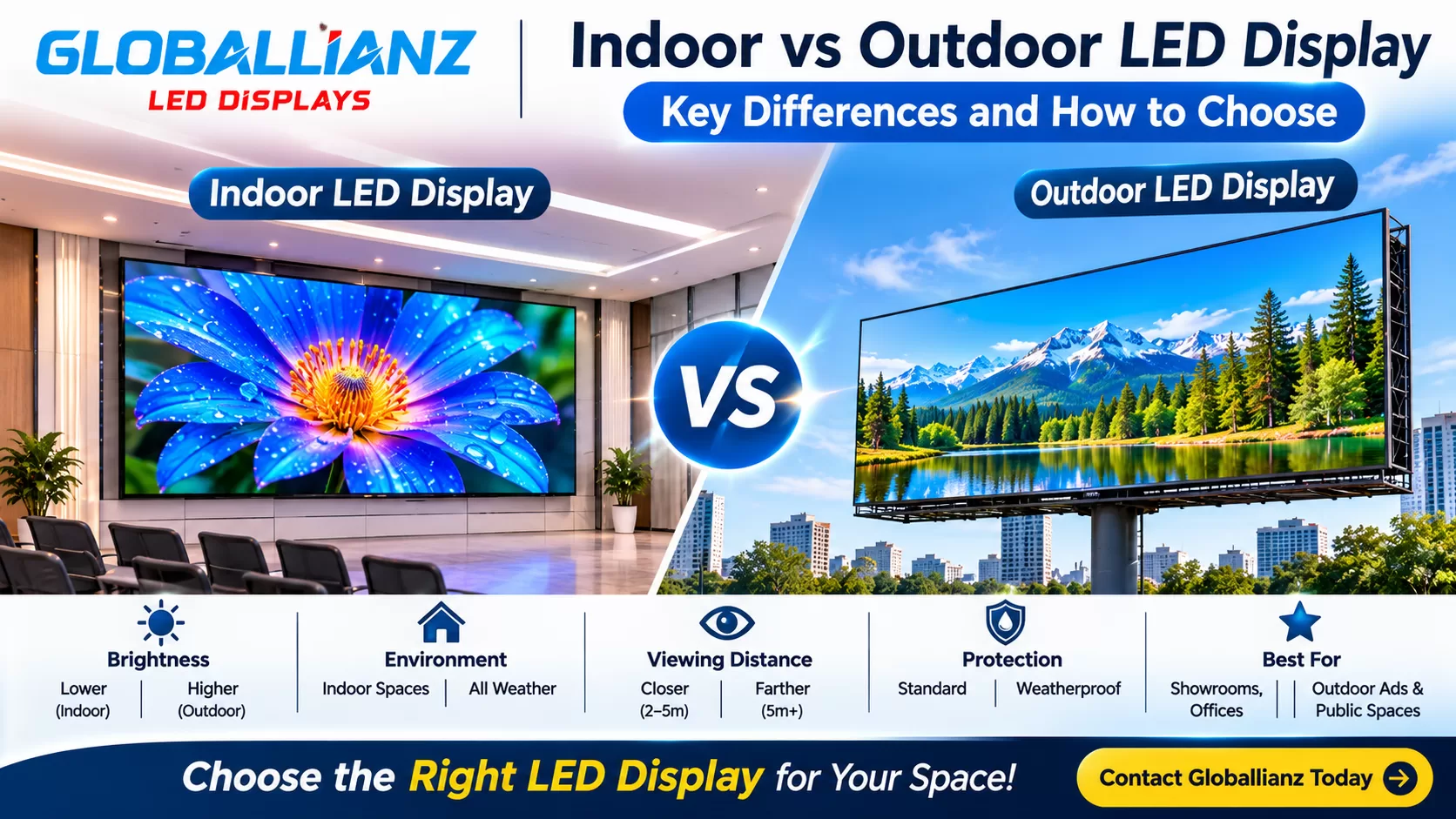
| Indoor LED display | Outdoor LED display | |
|---|---|---|
| Brightness | about 600–1,200 nits | about 5,000–8,000 nits |
| Weather protection | Not waterproof (around IP30) | Sealed against rain and dust (IP65 front) |
| Typical pixel pitch | P1.5 to P4 | P3 to P10 |
| Viewing distance | Close: 1.5–20 m | Far: 4 m to 100 m+ |
| Cabinet | Slim, light, often front-serviceable | Heavier, waterproof, with cooling |
| Power use per sq ft | Lower | Higher (because of brightness) |
| Structure | Wall or floor stand | Wall, pole or lollipop structure designed for wind load |
| Cost per sq ft (same pitch) | Lower | Higher |
1. Brightness: the biggest difference
Brightness is measured in nits. Indoors, 600–1,200 nits is plenty — any brighter and the screen becomes uncomfortable to look at. Outdoors, the screen has to compete with the sun. In Indian summers, a screen facing south or west needs at least 5,000 nits, and 6,500 nits or more to stay clearly visible at midday.
Good outdoor screens include an automatic brightness sensor that dims the screen at night. This saves electricity, extends LED life and avoids glare for drivers and neighbours.
2. Weather protection (IP rating)
The IP rating tells you how well the screen keeps out dust and water. Outdoor displays should be IP65 at the front (dust-tight and protected against water jets) with a sealed, waterproof rear. That is what lets them survive heavy monsoon rain, dust, heat and humidity.
Indoor screens are not sealed. Even a small amount of rain, condensation or water from cleaning can damage them, so an indoor screen should never be used outdoors.
3. Pixel pitch and viewing distance
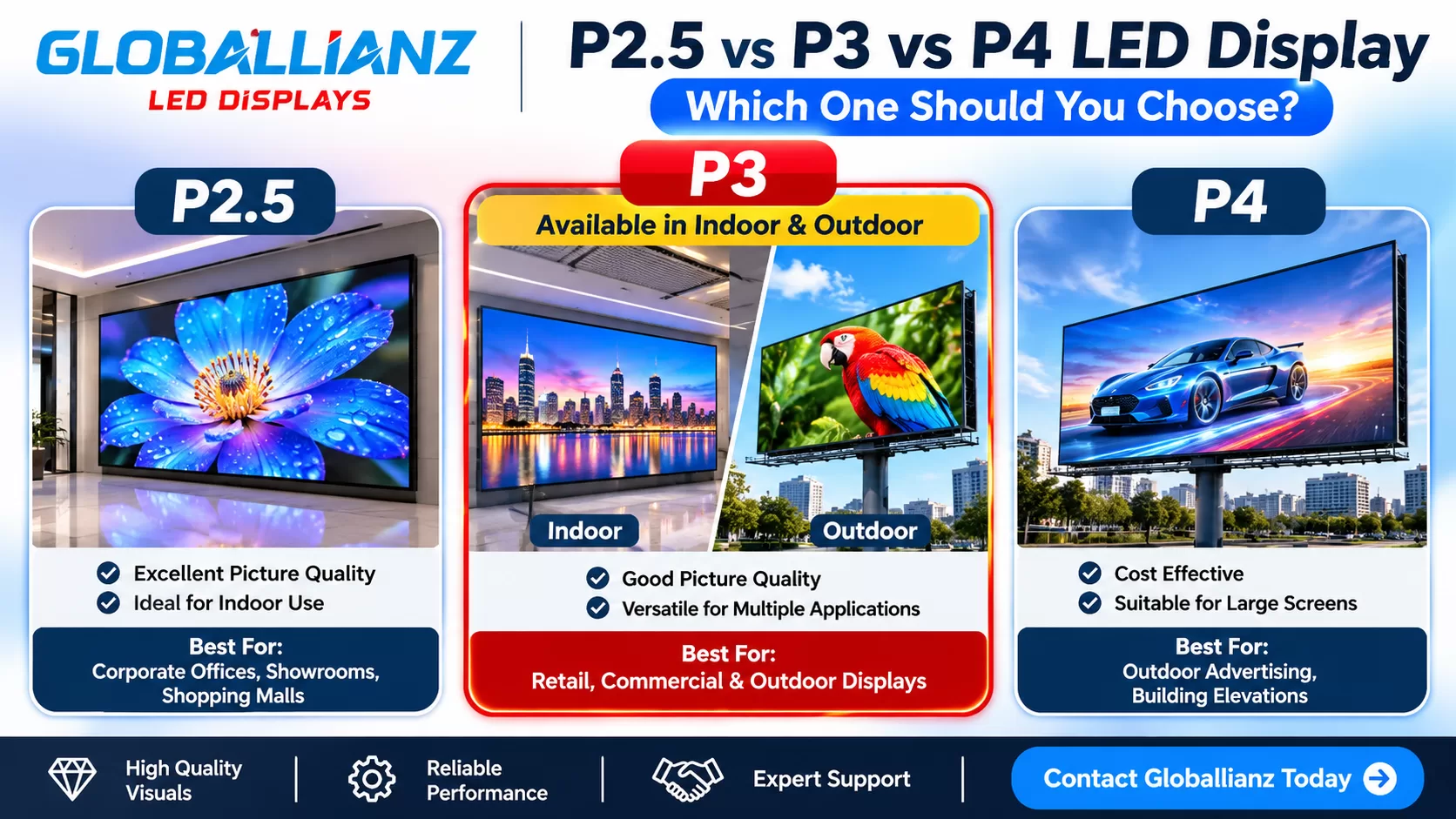
Indoor viewers are close, so indoor screens use finer pitches such as P2.5, P3 or P4. Outdoor audiences usually look from further away — across a road, from a car or from a parking lot — so outdoor screens commonly use P4, P5, P6, P8 or P10. A larger pitch outdoors gives more screen area for the same budget without losing visible quality at that distance. See our guide on P2.5 vs P3 vs P4 for choosing a pitch.
4. Heat, power and electrical safety
Higher brightness means higher power use and more heat. Outdoor cabinets are designed with ventilation or cooling, and the installation should include proper earthing, surge protection and a lightning arrester. Indoor screens run cooler and use less power, but still need good ventilation behind the wall.
5. Structure and installation
Indoor screens are usually fixed to a wall or a floor stand. Outdoor screens need a steel structure designed for the screen's weight and the wind load at that height — for example a wall mount, a single pole or a lollipop (double-sided pole) structure. Ask your supplier for a structure drawing and plan safe access for maintenance.
For outdoor advertising screens, check with your local municipal corporation about advertising or signage permission before installation.
What about shop windows? Semi-outdoor screens
A screen inside a glass shop front that faces the street sits in between. A normal indoor screen will look washed out in daylight, while a full outdoor screen may be more than you need. For these places, a high-brightness indoor (semi-outdoor) screen of about 2,500–4,000 nits is often the right answer.
Which one do you need?
- Choose indoor for lobbies, showrooms, malls, conference rooms, auditoriums, stages, classrooms and studios.
- Choose outdoor for hoardings, building fronts, shop fascias exposed to sun and rain, petrol pumps, hospitals and college gates, roadside poles and stadiums.
- Choose high-brightness indoor for screens behind glass that face strong daylight.
Frequently asked questions
Can I use an indoor LED screen outdoors under a shade?
It is not recommended. A shade does not stop humidity, dust or wind-blown rain, and the screen will not be bright enough during the day.
Can an outdoor LED screen be used indoors?
It can work, but it is usually too bright, too coarse for close viewing and more expensive than needed. An indoor screen is the better choice.
How long does an LED display last?
Good-quality LEDs are typically rated for around 100,000 hours to half brightness. In practice, life depends on brightness settings, heat, power quality and regular maintenance — an annual maintenance contract (AMC) helps outdoor screens most.
Get expert advice for your site
We supply and install indoor, outdoor and semi-outdoor LED displays, including wall, pole and lollipop structures. Share your location and size, and we will recommend the right screen. Get a free quote or contact us.